How to Increase Push-Ups: A 6-Week Plan Built on Research
To increase push-ups, do more total clean reps each week and make them harder once sets feel easy. Get a 6-week plan and a rule for when to change it.
PushSlayer Editorial Team · Updated · 4 min read
Leer en español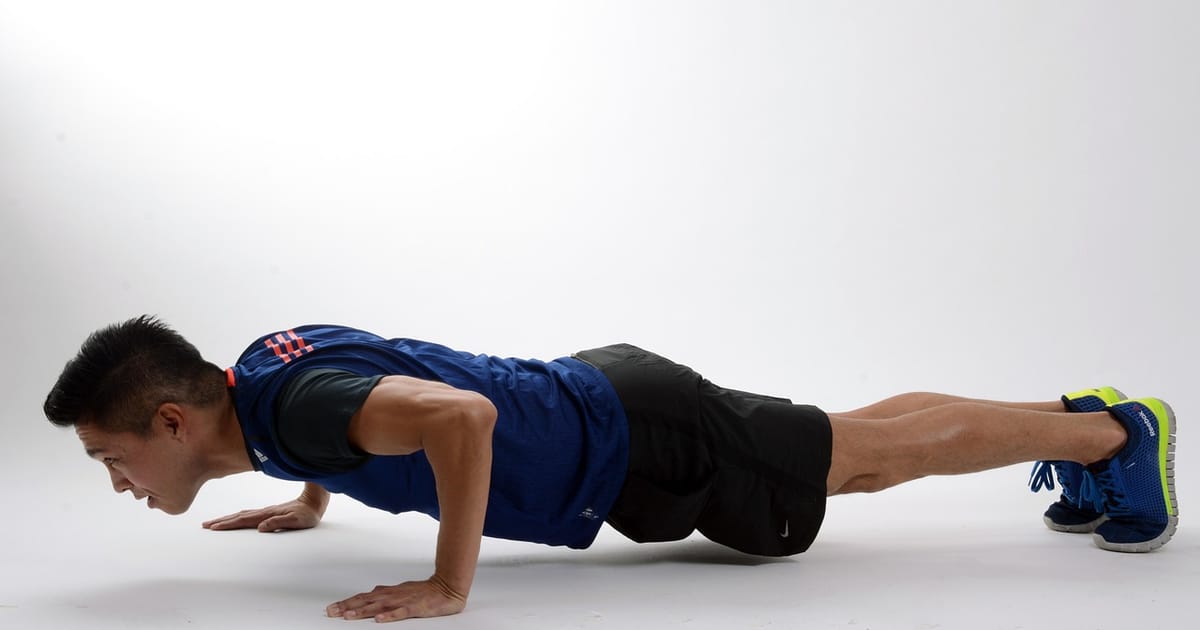
To increase your push-ups, do more clean push-up sets each week and add one rep at a time, without grinding every set to failure. When a set of 12 or more feels easy, switch to a harder variation instead of chasing higher numbers. Research on resistance training supports three levers: more total sets, gradual progression, and practicing the exact movement you want to improve. The 6-week plan below uses all three.
Why more push-ups come from more practice, not just more effort
Push-up reps are a strength skill, so the best predictor of progress is how much good practice you collect. A meta-analysis of 15 studies found a graded relationship between weekly sets and muscle growth: each extra weekly set was linked to about 0.37% more gain. That review measured muscle size, not rep counts, but the same logic applies. More hard sets per week beat the same few sets repeated for months.
Practicing the push-up itself also matters. In a 2018 randomized trial, 23 moderately trained men trained three days a week for 4 weeks, either with progressively harder push-up variations or with the bench press. Both groups got stronger on bench press, but the push-up group improved significantly more on a push-up progression test. The study is small and short, so treat it as a hint: to get better at push-ups, do push-ups.
How do I find my starting point?
Warm up, then do one set of as many push-ups as you can with full depth and a straight body line. Stop when your form breaks, not when you stall. That number is your max.
Retest the same way every two weeks, on a day you aren't tired. Count only reps you would be comfortable repeating tomorrow.
What is the best way to add reps each week?
Add small amounts. The ACSM position stand on progression recommends that when you can do your current workload for one or two reps over the target, you increase the load by 2-10%. With bodyweight, the "load" is reps, sets or the difficulty of the variation, so one extra rep per set is a sensible step for most people.
For beginners, the same position stand recommends training 2-3 days a week, with loads in the 8-12 repetition range. That is a long way below your max if you can do 30, which is why the plan below starts at about 60% of your max per set rather than a set to failure.
A 6-week plan to increase your push-ups
This is a coaching plan built on the principles above, not a protocol from one study. It uses three non-consecutive days a week (for example Monday, Wednesday, Friday).
- Test your max, then set your starting reps per set at 60% of it, rounded down, with a minimum of 3.
- On each training day, do the sets in the table with 1-2 minutes of rest between them. The ACSM suggests 1-2 minutes of rest for programs aimed at muscle growth.
- Stop a set early if your form breaks. A shorter set done well counts for more than a long set done badly.
- In week 6, retest your max and set a new starting point.
| Week | Sets | Reps per set | Example if your max is 10 |
|---|---|---|---|
| 1 | 4 | 60% of max | 4 x 6 |
| 2 | 4 | 60% of max + 1 | 4 x 7 |
| 3 | 5 | 60% of max + 1 | 5 x 7 |
| 4 | 5 | 60% of max + 2 | 5 x 8 |
| 5 | 5 | 60% of max + 3 | 5 x 9 |
| 6 | 3 | 60% of max | Easy sets, then retest your max at the end |
Week 6 is a lighter week on purpose. You arrive at the retest with less fatigue, so the number reflects what you built.
Do I need to train to failure?
No. A 2022 meta-analysis of 15 strength studies with 394 participants found no significant difference in strength gains between training to failure and stopping short, and the authors concluded that failure is not required for gains in strength and muscle size. Failure training did not look harmful either, and the review included only young adults, so it says less about older lifters.
In practice, finish most sets with 2-3 reps left. Save an all-out set for the retest.
What if I am stuck at the same number?
First check the basics: you are not repeating the same easy sets, and you are counting only reps with the same depth. Then pick one change at a time.
- Add a set. Volume has the clearest evidence behind it, so a fifth or sixth set is the first lever to try.
- Slow the lowering. The ACSM position stand lists eccentric (lowering) actions as part of strength programs, and a 3-second descent makes the same rep harder without extra equipment.
- Shift the difficulty. If standard push-ups have stalled, practice an incline version for volume, and a harder version such as feet elevated for a few low-rep sets.
When should I switch to a harder push-up?
When you can do about 20 or more clean reps per set, the push-up is acting as an endurance drill. A 2017 meta-analysis of 21 studies found that muscle growth was similar across light and heavy loads when sets were taken to failure, but maximal strength gains were greater with heavy loads. A harder variation, such as feet on a step or a slow lowering, gives you that heavier effect while keeping the movement you want to improve.
A practical rule: once all your sets in a session reach 12 reps with good form, move one set to a harder variation and keep the rest standard. Next session, add a second harder set.
What if I cannot do a full push-up yet?
Start on an incline, with your hands on a counter or sturdy table, and lower the surface as you get stronger. Our incline push-up guide shows how much load each height removes and gives a 6-week plan to the floor. Apply the same table, using your incline max as the starting number. If a push-up causes pain in your shoulder, elbow or wrist, stop and see a doctor or physiotherapist.
Once you can add volume without losing form, pair this plan with the approach in our guide to doing push-ups every day, which covers how hard daily sets should be and when to rest. To train the rest of your body too, the beginner bodyweight workout program puts push-ups next to five other movements, each with its own ladder of harder versions.