How to Stop Lusting: Use Exercise to Ride Out the Urge
How to stop lusting without fighting your own sex drive: a 15-minute plan that uses exercise to ride out an urge, ways to cut triggers, and when to get help.
PushSlayer Editorial Team · Updated · 5 min read
Leer en español
If you want to stop lusting, you don't have to switch off sexual desire. What you can change is what you do in the minutes an urge is strongest. Here is a simple plan to test: notice the urge, leave the place where it started, and move briskly for 10-15 minutes with push-ups, squats or a walk. Trials show short bouts of exercise cut cigarette cravings, and a small study found the same for sugary snacks. We found no trial that tested exercise on sexual urges, so treat it as a reasonable bet and pair it with fewer triggers.
A 15-minute plan for when the urge hits
To control the urge for sex in the moment, name it, leave the room, move briskly for 10-15 minutes, then go straight to your next task. Use the same steps every time, so the plan becomes the habit instead of the urge.
- Name it. Say or think "this is an urge, it will peak and pass". In a 2009 trial with 123 student smokers, a short lesson in this "urge surfing" technique did not make urges weaker, but the group who learned it smoked fewer cigarettes over the next 7 days. The point is to change your response, not to feel nothing.
- Rate the urge from 1 to 10.
- Leave the room. Get out of bed, out of the bathroom, away from the screen. Put your phone in another room or in your pocket with the screen off.
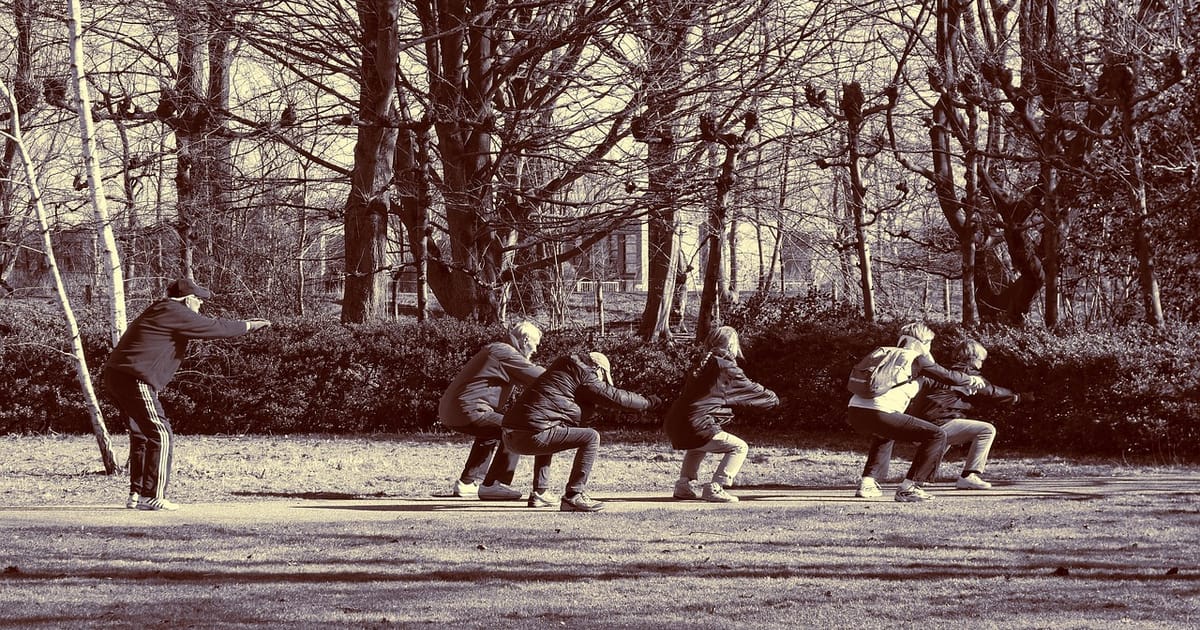
- Move for 10-15 minutes. Pick one option from the table and keep a brisk pace: breathing faster, but still able to talk.
- Rate the urge again, then go straight to your next planned task: shower, cook, study, call someone. Don't go back to the place or screen where the urge started.
| Where you are | What to do | Time |
|---|---|---|
| At home | 5 rounds: 10 push-ups, 15 squats, 30 seconds of plank (fewer reps if that's what you can do with good form) | About 10 minutes |
| Outside | Brisk walk (check your pace with our walking guide) | 15 minutes |
| No space, late at night | Wall sit or plank holds, 30-60 seconds each, 5 rounds | 5-8 minutes |
| Gym or park | Your normal workout, started early | Any |
If push-ups are still hard for you, use incline push-ups with your hands on a counter. If you can, add the daily push-up plan as a fixed morning routine, so you start the day with a win before urges show up.
What does exercise do to an urge?
Exercise takes the edge off a craving fast, and the effect lasts for a while after you stop. The best evidence comes from smoking research:
- A 2007 systematic review of 14 studies found that cravings and withdrawal symptoms dropped quickly during exercise and stayed lower for up to 50 minutes afterward. Doses as small as 15 minutes of light exercise, and even 5 minutes of isometric exercise, helped. Smokers also waited two to three times longer before their next cigarette in four of the studies.
- A 2013 meta-analysis with individual participant data pooled up to 17 trials and concluded there is strong evidence that physical activity acutely reduces cigarette cravings.
- In a small 2015 crossover study, 47 overweight adults had weaker urges for sugary snacks after a single 15-minute brisk walk than after resting.
These studies measured nicotine and food cravings, not sexual urges. The 2007 review authors judged that distraction was probably not the main reason exercise works, and suggested stress reduction or neurobiological changes as possible mechanisms. Neither is specific to cigarettes, so exercise is worth testing on other urges too. You can test it on yourself with the rating in step 5 of the plan above.
One caution on intensity. In a small 1996 study of 36 women, 20 minutes of intense cycling increased the body's arousal response to an erotic film 15 minutes later, although the women did not report feeling more aroused. The craving studies found benefits from light and moderate exercise too, so a brisk pace is enough, and leaving the trigger behind matters as much as the workout.
Is lust a problem or a normal sex drive?
Usually it is a normal sex drive that you want more control over. Feeling desire is not a disorder, and wanting to act on it less is a personal goal, whether the reason is your faith, a relationship, focus or time. If you want to quit lust for faith reasons, the plan above works alongside that.
Psychiatry draws the line at loss of control and harm. Compulsive sexual behaviour disorder, as described in World Psychiatry by researchers involved in ICD-11 (including a WHO staff member), is a pattern of failing to control intense, repeated sexual urges for an extended period (for example, 6 months or more) that causes marked distress or problems at work, school, in relationships or in daily life. The same text says a high sex drive without loss of control is not the disorder, and that distress coming only from moral disapproval of your urges is not enough for a diagnosis.
If your situation sounds like the disorder, the plan can still help, but talk to a doctor or a psychologist too. The last section covers when.
How do you stop lustful thoughts before they start?
To stop lustful thoughts before they start, cut the cues that set them off and give the usual time slot a new routine. Habits are triggered by context: a place, a time, a device. The UCL review on habit formation adds one point that matters here: it is not possible to form a habit of not doing something. You need a new action to put in the old slot.
- Write down when urges hit hardest for a week: time, place, mood, what you were doing.
- For the top two situations, write an if-then plan. "If I am in bed and reach for my phone, then I put it on the charger across the room and do 20 squats."
- Keep the phone out of the bedroom at night if late scrolling is the trigger. Use your phone's built-in content filters if explicit content is the problem.
- Fill idle time on purpose. If your log shows boredom, stress or late nights alone as triggers, plan those hours with training, people or a task.
- Train on a fixed schedule. A regular workout gives your day structure, and each session is a win you can count.
Expect slips. When one happens, restart the plan at the next urge instead of writing off the whole week.
Does working out reduce sex drive?
Lowering your sex drive is not the goal, and the main evidence on training and libido comes from one survey of men who did endurance training. A 2017 survey of 1,077 men who did endurance training found that men who trained at lower or moderate intensity and for shorter or moderate durations had higher odds of a normal or high libido score than those who trained the hardest and longest. The study was cross-sectional, so it shows a link, not cause and effect, and it did not include women.
So don't try to exhaust yourself out of desire. Use exercise for what the evidence supports: short bouts that take the edge off an urge, and a routine that leaves less idle time.
Does NoFap increase testosterone?
The evidence is thin. The study usually quoted as proof, a 2003 study of 28 men, reported a testosterone peak on day 7 of abstinence, at 145.7% of baseline, and no regular change after that peak. It was retracted in 2021 because it overlapped heavily with an earlier article the lead author had published in Chinese.
The other study often cited is even smaller. In a 2001 study of 10 healthy men, testosterone was higher after 3 weeks of abstinence than before it. Neither study measured muscle, strength or body composition.
When should you get help?
See a doctor, psychologist or sex therapist if urges and the behavior they lead to have gone on for months despite many serious attempts to stop, and they are hurting your relationships, work, studies or health. Those are the features the ICD-11 description centers on. Also get help if you feel intense shame, low mood or anxiety around sex, since those deserve care whatever the cause.
Asking for help is a practical step. A professional can tell a high sex drive apart from a compulsive pattern and offer treatment that fits.